
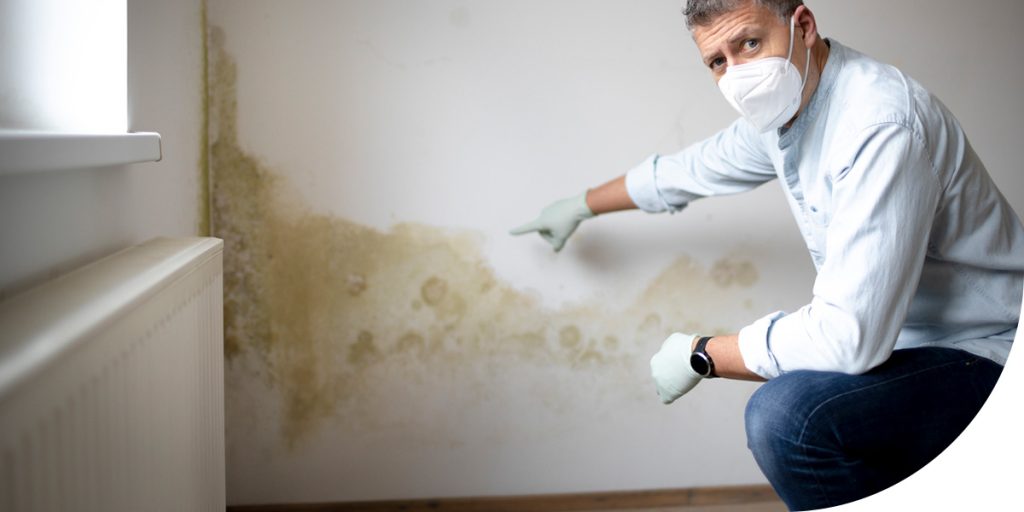
Mold is one of the most misunderstood issues homeowners face. Because it’s often hidden and misunderstood, misinformation spreads quickly — and believing the wrong advice can lead to bigger problems, higher costs, and ongoing exposure.
Let’s clear the air by breaking down some of the most common mold myths, why they persist, and what homeowners actually need to know to protect their homes and health.
Myth #1: Bleach Kills Mold Completely
This is one of the most common mold myths — and one of the most dangerous.
While bleach may remove surface staining, it does not effectively kill mold roots in porous materials like drywall, wood, grout, or insulation. Mold can continue growing beneath the surface and return quickly.
In some cases, bleach can even make the problem worse by adding moisture to already damp materials.
Myth #2: If You Can’t See Mold, It’s Not There
Mold doesn’t need to be visible to cause problems.
Hidden mold commonly grows:
- Behind drywall
- Under flooring
- Inside HVAC systems
- In attics and crawlspaces
- Behind cabinets or appliances
Musty odors, unexplained allergy symptoms, or recurring moisture issues are often the only warning signs.
Myth #3: Mold Only Grows in Flooded or “Dirty” Homes
Another one of the most persistent common mold myths is that mold only affects neglected or water-damaged homes.
In reality, mold can grow in any home when moisture is present — even well-maintained, newly built houses. Small leaks, condensation, humidity, or poor ventilation are all it takes.
Clean homes are not immune to mold.
Myth #4: Painting Over Mold Solves the Problem
Covering mold with paint or sealant does not eliminate it.
Moisture trapped behind paint allows mold to continue growing unseen until it eventually bleeds through the new surface. This is why mold often reappears in the same spot after painting.
Paint is cosmetic — not corrective.
Myth #5: Mold Is Only a Health Issue If You’re Allergic
While some people are more sensitive than others, mold exposure doesn’t require a diagnosed allergy to cause problems.
According to the CDC, mold exposure can lead to respiratory irritation, coughing, congestion, headaches, and worsening asthma symptoms — especially in children, seniors, and those with compromised immune systems.
🔗 CDC – Mold Basics: https://www.cdc.gov/niosh/mold
Myth #6: A Dehumidifier Alone Prevents Mold
Dehumidifiers are helpful, but they’re not a cure-all.
If there’s an active leak, poor ventilation, or condensation issue, mold can still grow even when a dehumidifier is running. Moisture trapped inside walls or materials won’t always show up on a humidity monitor.
True prevention requires addressing the source of moisture.
Myth #7: Small Mold Problems Don’t Need Professional Help
Small visible spots may seem harmless, but they can be signs of a larger hidden issue.
The EPA emphasizes that mold growth is always linked to moisture problems, and unless the moisture source is corrected, mold is likely to return.
🔗 EPA – Mold, Moisture, and Your Home: https://www.epa.gov/mold/mold-moisture-and-your-home
Professional testing helps determine:
- How widespread the mold is
- Where it’s coming from
- Whether hidden mold is present
Why Believing Common Mold Myths Can Be Costly
Misinformation often leads homeowners to:
- Delay proper inspections
- Rely on ineffective DIY fixes
- Miss hidden moisture problems
- Experience repeated mold growth
- Spend more money over time
Understanding the facts helps you take the right action the first time.
The Truth About Mold
Mold is not just a cleaning issue — it’s a moisture issue.
And moisture problems don’t fix themselves.
If you’re dealing with recurring mold, unexplained odors, or moisture concerns, professional mold testing can provide clear answers and prevent long-term damage.
Final Thoughts
When it comes to mold, misinformation can be just as harmful as the mold itself. By understanding and avoiding these common mold myths, homeowners can make smarter decisions, protect their property, and maintain a healthier living environment.
If you suspect mold or want peace of mind, professional testing is the safest way to know what’s really happening in your home.